
Vtp

16 November, 2023

GETTING STARTED ON CONTENT MARKETING/ BLOGGING

1. Intro to content marketing
With so many businesses operating online, standing out from the crowd is essential. Content marketing is a great way to help you attract your audience’s attention.

Here, we’ll look at why content marketing is important, and how you can use it to engage with your audience. We’ll also introduce some best practices to help you create your own content marketing campaigns.

Content marketing is based on the creation and sharing of online material, like videos, blogs, and social media posts. It’s designed to generate interest in a company’s products or services by capturing people’s attention.

It can also help to increase sales by directing traffic to your website, boost awareness of your brand and build trust and recognition amongst your audience.

Let’s journey back to the days before the web, when TV, print and radio dominated. Two-way interaction wasn’t possible between brands and customers and audiences received advertising messages whether they wanted them or not. These days, people can pick and choose when they engage, and content marketing allows businesses to connect with their audiences like never before.

Imagine you run a Hair Dressing Salon business, and want to use content marketing to increase awareness of your business and drive more traffic to your website. To achieve this, you could publish engaging content about hair style on your website’s blog, and promote it across the company’s social media platforms to increase readership.

Great content campaigns are based on understanding who you’re writing for. The more you know about your audience and share their passions, as well as their pains, the easier it will be to engage them on a personal level.

Try considering the challenges or pain points your customers face, and then tailor your content to these insights. For the hair dressing salon business, for example, pain points for customers could include a lack of time, bad weather, or simply wanting to keep their hair healthy.

Next, let’s cover some effective content marketing practices. The key to success is creating a content marketing campaign that accomplishes three things: 
(1) answering your audience’s questions,
(2) providing something of value and 
(3) keeping them wanting more.

Here are a few best practices to keep in mind as you put together your own strategy:

* Take the time to get to know your audience better. 
* Look at which accounts they follow on social media to get a sense of their likes and interests.
* Experiment to find the best types of content for reaching your audience and don’t be afraid to use multiple formats.
* Choose the right places to publish your content and make sure you’re talking directly to your audience
* Throw away the business speak and stock responses, and prioritise natural language to interact with your audience.
* Make your content unique, interesting and exciting. 
* Use engaging headlines, eye-catching pictures and informative language to capture your audience's attention.

By keeping these pointers in mind when creating a content marketing strategy, you can boost your potential reach and strengthen your presence online.

When starting to write your own content marketing strategy remember the three keys to success mentioned earlier:

Focus on answering your audience’s needs
Create content they’ll find valuable
Keep them engaged so that they’ll visit you in the future for more content.

Now, try brainstorming how content marketing can be used to engage your audience online, and consider what goals it could help you achieve.

Key learnings
With so many businesses and brands online, content marketing is a valuable tool in helping you to stand out. In this lesson, we'll explore:
What content marketing is, and why it can add value to an online business
Best practices for creating your own content marketing strategy.

2. Get to know your online customers
Everyone is different, so when it comes to creating online content it’s good to think about who your audience is, and what they want to know. This is where audience segmentation can help.

Here, we’ll explain what audience segmentation is and how it can be used to improve your content marketing campaigns.

Segmentation involves dividing your audience into groups of who they are and what they like. Rather than spending time and money targeting a wide range of people, segmentation helps to identify the groups most interested in your product or service. The result is a more cost effective and persuasive way to connect with potential customers.

By researching your audience and segmenting them into groups, you can then create specific content that excites, entertains and engages them.

For example, imagine a new hair dressing salon business building its content marketing strategy. The first step would be to segment potential audiences and identify who would benefit from its service: this could be ladies who don’t have enough time to go to salon, or ladies who want to socialise with people.

The next step would be to create content with that specific group in mind. For the busy ladies segment, this could include helpful content about hair care, or a guide on how much daily hair care is good for ladies.

But why exactly is audience segmentation so important when creating and distributing content?

Understanding the habits and preferences of an audience can help you target content directly to that specific group of people.

For example, if you’re looking to launch a new Salon, and your website analytics reveal that young people are statistically more interested in barbing than fixing weavon, this would suggest you should target your content to this group.

Another benefit is being able to pinpoint audience behaviour and using this information to refine your marketing approach. Now that you know people are interested in barbing, you could research a step further and find out how often this segment people barb and at what time of day. Try to answer: What social channels does this group use? What do they do with their free time? For example, people who enjoy the visual nature of a social media platform like Pinterest are likely to prefer different content to those who like to read and contribute to forums. All this information can provide value when it comes to creating tailored content for this group.

To get insights into what people search for,  you also can utilise analytics features on social media platforms like Facebook and Twitter to get a glimpse of audience demographics and behaviours. Experiment with a number of tools and compare results to get a more complete picture of who your audience is, and how they behave online.

Finally, don’t forget to talk to people. It may be easy to forget in this online world, but connecting with people face to face can yield some truly unique insights into who they are and what they need.

To wrap up, here are some questions for you to contemplate:
* Why is audience segmentation so important in content marketing?
* How can it help brands when creating and distributing content?
* And which tools can you explore to better understand your audience?

Key learnings
Making sure you are saying the right thing, to the right people, and are connecting with them at the right time is critical when it comes to content marketing. In this lesson, we'll explore:
* What audience segmentation is and how it can benefit a business
* How to use audience segmentation to boost your content marketing efforts
* Some of the tools and systems available to help you segment your audience correctly.

3. Choosing the right format for your content
Online content can take lots of different forms: from case studies and ebooks, to infographics, images and video clips. Each of these different formats comes with its own benefits; whether it’s to inspire, educate or entertain.

Here too, we will explore popular content formats and explain how to choose formats based on the specific needs of your audience.

Whatever format you choose, the purpose of content is always the same - to connect with an audience. This audience, in turn, will engage, share, learn, and perhaps even convert into customers.

Let’s start by exploring some popular content formats.

Blogs are typically published as a subsection of an existing website, and can include original content or guest-authored content. Writing unique, quality blog posts can help increase publicity and give you interesting content to share across other channels, like social media.

Infographics are informative and a great way to present knowledge visually. They work well online thanks to their eye-catching format and can help present complex or unusual content in a creative way.

Ebooks are educational, easy-to-read guides focused on a specific topic. This format provides readers with practical content and will help you stand out as an expert in your field.

Videos can include anything from product demonstrations to tutorials and customer testimonials. They allow brands to create engaging, entertaining, and useful content that can be consumed on the go.

There are many other content formats to consider, including: press releases, webinars, reviews and case studies. To explore even more content formats, please check out the additional links provided at the end of this topic.

Successful content doesn’t have to go viral or reach millions of people. Focus on the creating content should be tailored to your audience, and design it so that it moves customers towards a specific goal or action.

Now that you’re familiar with different formats, the next step is to consider the main goal of your content. In content marketing, there are typically four main purposes of content, which are:
To entertain
To inspire
To educate, and
To convince.

Let’s take a look at how to match different content formats to your content goals.

Meet Madam Mercy. Madam Mercy runs a hair dressing salon, and she looking to create a content strategy to help boost her online presence.

To entertain her audience, she decides to publish some video clips of her styles over social media. To inspire, she plans to create a forum space on her website where people can post their questions and get insights from both her and others hair styles. To educate her audience, she shares blog posts including top tips on hair care and hair nutrition. To convince people to use her services, she’ll share testimonials from happy customers, as well as ebooks to showcase her knowledge in specialist grooming skills.

In your own business scenario, consider how certain formats are best paired with specific content goals. For example, if your goal is to educate, then guides, ebooks and infographics would be the ideal formats –whereas if your goal was to entertain, a better format choice would be quizzes or competitions.

When assessing which content formats are the right fit for your goals, think about the ones you can easily produce yourself, and consider recruiting assistance for those you can’t. Identify the purpose of your content, and then select the formats best suited to that goal. Finally, when designing your content, remember to consider your audience, and address their specific needs in a format that will wow them.

Key learnings
Content is much more than just text on a screen. From entertaining GIFs to blog posts, whitepapers, and full-length videos, understanding which content format can make the most impact on your audience is critical. In this lesson, we'll explore:
* Popular online content formats.
* The four main purposes for content marketing.
* How to match different formats to your content goals.

To save a space, you can get full tutorial on this using this link to our shop @ Bem T Celestial Computers
When you are facing the road to your success, destiny and financial freedom,  Satan always blocked you on the road to hinder you from going to success, my people it is not easy, a road to success is a hard task, a battle to fight, therefore you have to struggle high so as to win the battle, today is the time, tomorrow will be too late, let's move together and climb the ladder of success. 


The link is still available here, don't left behind, so lets go  https://paystack.shop/bem-t-celestial-products-and-services

And where ever you are confused don't hesitate to call or chat me on this WhatsApp number for more details. 
08027836543

It's still that Counselor Bem T Celestine (It won't be Ok untill you reach to success)

05 November, 2023

MAKE MONEY ONLINE WITH INFORMATION PRODUCT MARKETING

Your Easy Guide To Creating And Marketing Your First Information Product

Robert Allen, one of the world's most foremost information marketer once called information marketing business the easiest and fastest means of making money on the internet and I believe him.

You See,

With information marketing business, you do not need to have any prior experience or skill. You do not need to sell your personal belongings in order to get started because, it requires very little start up capital.

In fact I am going to reveal to you how to create your first hot-selling information product without spending up to ₦10,000.

Oh Yes! I Will....

You don't even need to be a University graduate (we've seen secondary school drop outs who are making a very good living with information marketing).

You don't need to rent a shop because you can carry out your information marketing business from the privacy of your bedroom or even from the comfort of your village, so long you have a valid e-mail address, a bank account and access to the internet.

So What Is Information Product Marketing?

Information marketing involves creating a product, packaging them in the form of an eBook, CD, Video tutorial, Manual, online courses, etc. and selling them online.

Remember, everyone surfing the internet is seeking information on one thing or the other, and if you can just provide a solution to what is giving them sleepless night, they will be willing and ready to empty their bank accounts just to purchase that information from you.

You can sell your ideas, expertise, hobbies and skills.

You may even decide to create a product on the topic that interests you the most. It may be on

  • Dating
  • How to pass UME
  • How to make money online
  • How to win Government contract
  • How to cure premature ejaculation
  • How to pass an interview
  • How to write an effective resume
  • How to travel abroad e.t.c.

My own favorite way of packaging information product is through an e-book, simply because it is easy, more profitable and super fast in delivery.

You only need to deliver your product inform of an e-mail message, attach the product you are selling and it gets delivered instantly.

If you accept credit cards on your website, it will be an added advantage because once your buyers insert their credit card details, they will be able to download the product themselves, your money would just keep on piling up even while you sleep.

N.B: e-Book stands for an Electronic Book. It is the same as a hard-copy book. The only difference is that, the pages can only be viewed on a computer. Just like we have a hardware and a software, e-book is a soft-copy while the books they sell in bookshops are the hard-copies.

It can be converted into a hard-copy once you print out its pages from a computer.

Gone are the days when you need to go through series of publishers before you can produce a book, now you can produce and publish your book online without having to go through any publisher.

I am guessing your next question would be, I cannot write, how will I be able to make money with information marketing?

My guess was right after all, that is exactly where the problem is, not everybody can write.

Now, don't start getting scared yet.... I could tell I was losing you with that statement...

Hold On A Second,

There is an easy way out and I'll show you.

You can actually create your own hot-selling information product without writing a word!

How am I able to do this?

Good question!

I'll explain to you

You can do this by making use of information product that has been created by other people. You don't believe me right ?

Ok, let me make it more crystal clear to you.

There are several e-Books with full resell rights and private label rights flying all over the internet, they are available on any topic you can think of.

When you buy a product with full resell rights, it means that the producer or creator legally permits you to resell it as if it's yours and keep 100 percent of whatever profit that you have made.


In the same vein, when you buy a product with private label rights, it means that you can remove the original creator of such a product and put your own name as if the product was created by you. Oh yes! you can, it is also legal to do so.


You get the drift now?

So what are you waiting for? You can actually start your information product marketing business right away.


And Do You Know What Is Even More Amazing?

It is the profit potential of this business, let me explain

If you buy a product with full resell right at ₦2,500, and with the marketing strategies that I am going to reveal to you, you are able to sell 200 copies every month at just ₦2,500. Now, let's do the maths... 200X2,500= ₦500,000


Did You See That? Five Hundred Thousand Naira In Just One Month!

That means you can be making a killing profit of 500k naira every month on a product that you spent just ₦2,500 to purchase.


Now tell me, what kind of offline business can give you such a profit?

Not only that, you will continue to make money from this product for as long as you live, and you can have as many products as you like that you are selling. That is nobody's business.

It may sound too good to be true, but it's true and 100 percent proven. What you don't know costs you money.

And to prove this to you...

I am not showing you all these pieces of evidence just to intimidate you. Not at all! We are not here for that. The major reason why we are here is to teach you step by step how to achieve greater or similar success with information product marketing business.

If you want to turn your Knowledge, Talent, Experiences, Passion and Interest into an endless flow of income, CREATE YOUR DIGITAL PRODUCT and share your expertise with the world.

If you want to build an online business that sells...Here is the sure fire niche no one is telling you about. You too can start your own information product marketing business and make lots of money from it daily like I do.

For you to be able to set up your own cash generating information marketing business like mine, I have therefore made available for you a detailed, comprehensive and easy to understand step by step training guides on how you can make millions monthly selling your ideas, expertise, hobbies and skills on the internet.

You will also discover how to create your own information products without writing a word. If you follow all my instructions in this training package, you will start getting credit alert from your bank like mine above.


INTRODUCING...

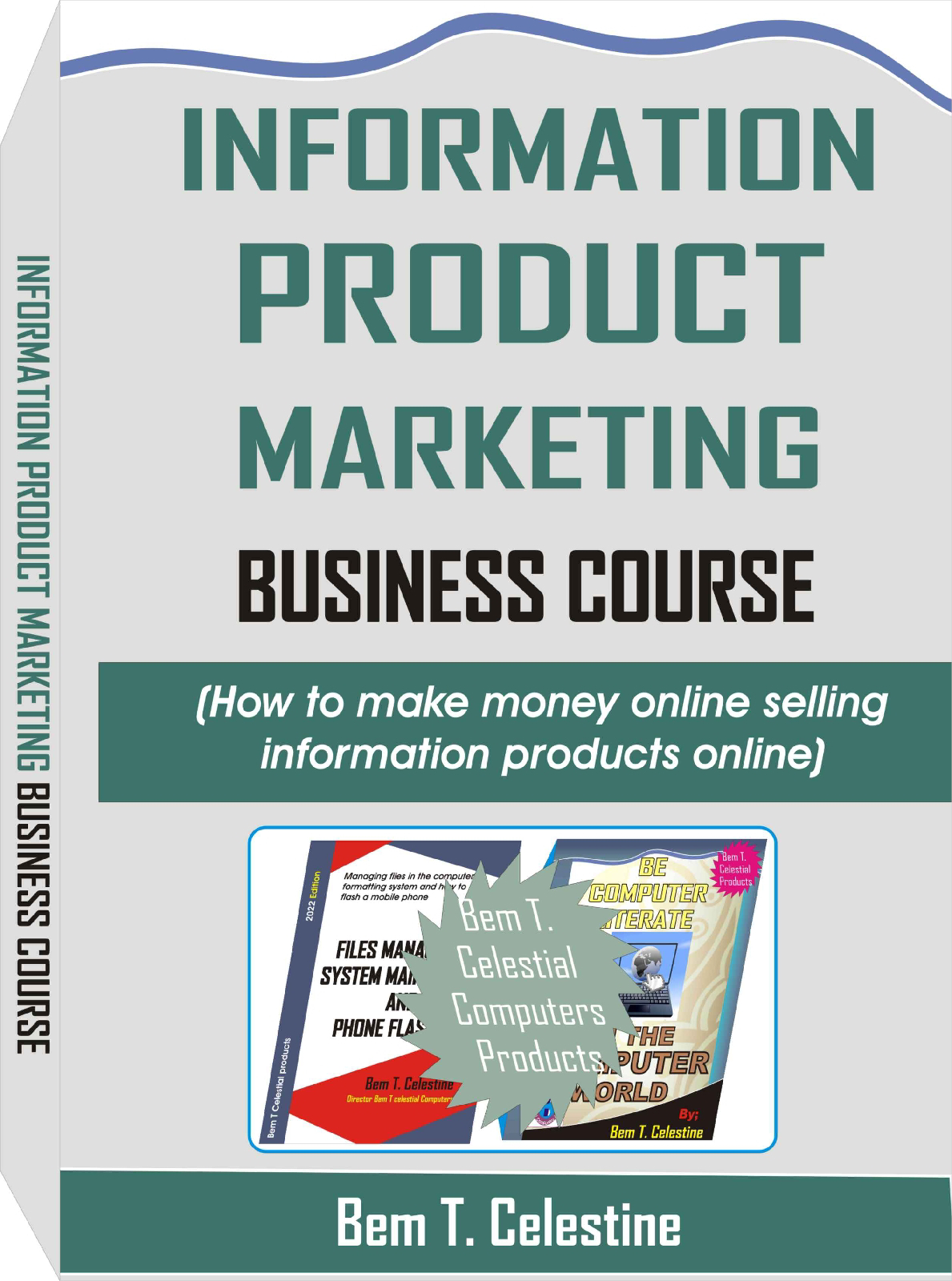
INFORMATION PRODUCT MARKETING BUSINESS TRAINING PACKAGE

This Training Package Reveals: First Class Coaching On How To Create Your Own Hot-Selling Information Product Even If You Don't Know How To Write. You Will Discover How To Set Up Your Own Cash Generating Business With Information Product Marketing.

This simple and easy-to-read training package with relevant videos, pictures and illustrations will show you...How to start your information marketing business from the scratch.


03 October, 2023

TRAVELLER'S HABIT

*10 TYPES OF PEOPLE YOU'LL DEFINITELY MEET, WHILE TRAVELLING BY PUBLIC BUS AS NIGERIAN* 
 *1. Seat Grabbers* : This ones are not preachers of love and they came prepared to fight. After you've settled into your seat, they'd come and tell you to stand up for them. If you don't, fight will start.

 *2 . The Sleeping Machines* : These ones cannot come and Kee themselves. The moment the car starts moving, they port to another universe.

 *3: The Where Are we now Group:* These ones behave like they've never travelled before, every five minutes they're asking you: Brother, please wia we dey now? We don reach Kafanchan? Shebi after Zaria we go enter Lagos?

 *4. The Zealous Prayer Warriors:* These ones don't smile, they are ever ready to give it to Satan hot hot. They'll speak in tongues from beginning to the end and sometimes even force all of you to join.

 *5. The Gluttons:* These ones don't want to hear that they got ulcer because of common travelling. So every chance they get they gauge their stomach well. They combine akpu with malt and garden egg, then top it with sugarcane. Five minutes later, they're pricing chin chin and water melon.

 *6. The urinators:* These one shout 'Driver stop!' every twenty minutes, then run into the bush to do the needful, they mostly belong to group 5. They are always offloading to create space for downloading.
 *7. The Assistant Drivers:* Drivers pray every morning not to meet these ones. They'll never blink, their eyes are focused on the driver. If driver tries overtaking they shout and insult daylight out of him. Try overspeeding and they might even land you a knock. I love them 😄.

 *8. Story Tellers:* These ones make the journey lively. Their mouths keep moving nonstop. They'll tell you what happened in their village in Adoka in 1967 and tell you how Adakole impregnated his uncle's neighbour's tenant, while you're still confused, they quickly move to tell you of their days serving in the military (mostly old men).

Have you heard about Bem T Celestial Computers Tyowanye? 
Just visit www.bemtc.business.site to know the location and go for their services. You can also go for their products and services online here; http://flutterwave.com/store/bemtcelestialproducts or https://paystack.shop/bem-t-celestial-products-and-services

 *9. The Unconcerned Ones:* These ones plug in their earphones throughout the journey.

 *Who can tell me the Number 10?* 
Just drop in a comment section below.

26 September, 2023

A Must Read Life Happenings

My wife is a CEO, she always hates me for being lazy and wants to divorce me. But she doesn't know that her success is bestowed by me.
"Dustin, here is the divorce agreement prepared by Ms. Nicholson, please sign it."
In the president's office of the Quine Group, Lyra Blaine, the secretary, placed a piece of paper on the table. A man sat opposite her, dressed in plain clothing.
"Divorce? What do you mean?"
"Your marriage with Ms. Nicholson is over. You're not even on the same level anymore. Your existence is nothing but a smear on our CEO's reputation!"
"A smear on her reputation?" Dustin frowned. "Is that what she thinks of me?"
Dahlia Nicholson and Dustin Rhys had been married for three years. After Dahlia's meteoric rise to success, she was about to abandon Dustin as a burden and filed for divorce. Unbeknownst to her, everything she had ever achieved was actually bestowed by him.
Back when they first got married, the Nicholson family was in ruinous debt. He was the one who helped them when they were at their rock bottom. Now that they became rich, Dahlia Nicholson was ready to kick him out.
With the sound of the door opening, a pair of enchanting high heels came into his view.
"You're finally here."
Dustin felt complicated when he saw the beautiful woman. They had been married for three years, during which they treated each other with care and respect. But this was how it ended. He still didn't know what he had done wrong.
"I'm sorry for being late, I was caught up with something else."
Dahlia Nicholson sat down. Her expression was as impassive as ever.
"You certainly are busy, if you need your secretary to help you deal with your divorce," Dustin said.
Hearing this, Dahlia frowned slightly. However, she did not explain herself. Instead, she said, "Since you're here, let's end it on a pleasant note. You can have the car, the house, and 8 million dollars as alimony. How does that sound?"
At that, she placed a card on the table.
"Do you really think our relationship can be measured by money?" Dustin asked.
"Too little? That's alright. Let me know what you want. I'll give you anything within my power," Dahlia said placidly.
"Are money and power that important to you?" Dustin was truly bewildered.
"Dustin, that's where you and I diverge in philosophy. You'll never understand what I really want." Dahlia shook her head in disappointment. 
"You're right." Dustin nodded without any emotion. "I heard that you've been close with the heir of the Nolan family. Is it because of him?"
Dahlia was about to deny it when she gave it a second thought. In the end, she nodded.
"You can say that."
"Okay. I hope you're happy with him." Dustin smiled and signed the divorce agreement without any more hesitation. All he felt now was disappointment. Ironically, today was also their wedding anniversary. There was cruel humor in divorcing him on the day they had gotten married.
"I don't want the money, I just want that crystal necklace back. My mother left it to me before she died so that I can give it to my wife."
"Okay."
Dahlia nodded and gave him the necklace.
"From today on, we will have nothing to do with each other!"
Dustin put on the necklace and left. He had no more gentleness in his expression, all that was left was distant aloofness.
"Did I do the right thing, Lyra?" Dahlia asked hesitantly.
"Of course you did!" Lyra nodded. " Dustin does not deserve you at all. You're destined to be the most powerful woman in Swinton!"
Dahlia did not answer her. As she watched Dustin leave, she felt as if she was losing something precious.

Chapter 2
In the elevator, Dustin stared at the crystal necklace dejectedly. It was time to awaken from this prolonged daydream.
Suddenly, his phone rang, breaking him out of his trance. 
A familiar voice raised, "Mr. Rhys, I'm Hunter Anderson from the Swinton Group. I heard that today is your wedding anniversary with Ms. Nicholson, so I've prepared a gift for you. I'm just wondering if you have any time today?"
"Thank you for your kindness, but I'm afraid we won't need the gift any more," Dustin said. 
"Why?"
Hunter could sense something wrong.
"Is there anything else you'd like to talk about, Mr. Anderson?"
"Actually, yes." Hunter cleared his throat awkwardly. "I've got a friend who contracted a strange illness. He's seen a lot of doctors, but none of them could do anything about it. I was hoping that you could help."
"Mr. Anderson, you know my rules."
"Of course! I'm sincere in my request. My friend owns some canscora, which I remember you were looking for. I'm sure he'll be willing to part with it if you help him," Hunter said.
"Is it true?" Dustin asked seriously.
"Yes, it is!"
"Alright, then I'll be willing to take a look." Dustin immediately agreed.
He wasn't interested in money or jewels, but rather some rare plants, as he needed them to save lives.
"Thank you, Mr. Rhys! I'll send someone to pick you up immediately!" Hunter smiled in relief. 
As the CEO of the Swinton Group and one of the Mighty Three of Swinton, Hunter acted exceptionally timid in front of Dustin.
"Great, one more done, five to go. I should have enough time," Dustin muttered to himself. His mood was lifted a little by this news.
With a ding, the elevator doors opened. As soon as he stepped out of the building, he saw two familiar figures walking to him. It was Dahlia's mother and brother, Florence Franklin and James Nicholson.
"Mom, ..." Dustin greeted.
"Did you and Dahlia get divorced?" Florence did not waste any breath.
"Yes, we did." Dustin gave her a forced smile. "It's not Dahlia's fault, it's mine. Don't blame her."
However, hearing this, Florence snorted coldly.
"Of course it's your problem. I know my daughter well. If you hadn't done anything wrong, why would she divorce you?"
Dustin was stunned. What was this? Victim blaming?
"Mom, stop wasting time." Suddenly, James stepped forward. "Listen, Rhys. I don't care whether you divorce my sister or not, but you're giving me all the money you got from her."
"Money? What money?" Dustin was flabbergasted.
"Stop feigning ignorance! My sister gave you 8 million dollars as alimony!" James said coldly.
"That's my daughter's money! Give it back!" Florence stretched out her hand in demand.
"I didn't take any money from her," Dustin denied. 
"Do you take us as idiots?" James did not believe him.
"Rhys, you'd better be tactful. Don't make me angry!" Florence warned.
"You can ask Dahlia if you don't believe me." Dustin did not want to explain himself any further.
James dove straight into Dustin's pockets.
Florence followed suit.
"Mom, do you have to do this?" Dustin frowned.
Florence spat on the ground in disgust.
"Who are you calling Mom? Who do you think you are?" As she spoke, she continued searching Dustin's pockets.
After some time, they didn't find what they wanted.
"Did he really not take it?" James said, displeased.
Suddenly, he spied Dustin's crystal necklace and pulled it off roughly.
"Isn't this my sister's necklace? Why is it here? You steal it?" James demanded.
"This is the Rhys family heirloom. Give it back!" Dustin said, expression darkened.
"A family heirloom? Does this mean that this is valuable?" James'eyes lit up. 
"Then it can be your repayment for these three years that you've been living with us. Let's go!" Florence gave her son a look and prepared to leave.
"Stop!" Dustin grabbed James'wrist. "Give me back the necklace!"
Seeing that he had no chance of freeing himself from Dustin, James threw the necklace onto the ground. With a crisp clink, the crystal necklace broke into pieces. Dustin blanched. This was the only thing he had to remember his mother by.
"How dare you lay your hands on me! I'd rather break it than give it back to you!" James said as he rubbed his sore wrist.
Dustin clenched his fists so tightly that his knuckles popped. His eyes were red with anger.
"Screw you!" Outburst, Dustin punched James in the face.
James was punched so hard that he spun back uncontrollably before falling to the ground. He was so dizzy that couldn't stand up.
"Let me teach you manners!" Dustin grabbed him by hair and lifted him. Then, he punched him several times.
James' face soon turned bloody from the punches.
"How dare you hit my son!" Florence screamed as she tried to help her son.
"Get off!" Dustin turned and glared at her. The glare was so intense that Florence froze in her tracks.

Chapter 3
"Get off!"
Those two words were enough to scare Florence motionless. 
When she finally got her wits back, Florence began screaming, "Help! He's murdering my son!" 
Soon, the Quine Group's security guards gathered around them.
"What happened, Mrs. Nicholson?" The head of the security guards recognized Florence and stood at her side immediately.
"Tom! Lock this guy up at once!" Florence yelled.
Just as they were about to act, a voice sounded.
"What do you think you're doing?"
A curvaceous woman in a silver dress barged into the crowd with her bodyguards. With her lips painted a fiery red, she was stunningly beautiful. Every move she made was alluring.
"She's gorgeous!"
The security guards stared at her dumbly. 
"Mr. Rhys, are you okay?"
The woman ignored the looks and headed straight toward Dustin.
"Who are you?"
Dustin narrowed his eyes at her, his anger dissipating.
"Nice to meet you, my name is Natasha Harmon. Mr. Anderson sent me here," the woman said with a smile. 
"Natasha Harmon? Is she the heiress of the Harmon family?"
"Oh, my God! Why is she here?"
Natasha Harmon was a well-known name around the city. She was pretty, influential, and smart. At 22 years old, she had already gained control of the Harmon Group and built her own business empire within five years. 
"Ah, it's you."
Dustin nodded.
He had heard of Natasha before, but he hadn't expected her to be involved with Hunter.
"Mr. Rhys, please wait in the car. I'll deal with this." 
Natasha snapped her fingers. Behind her, her four bodyguards whipped out their batons and advanced toward the crowd. The security guards back off.
"After you, Mr. Rhys."
Seeing that no one else dared to move, Natasha smiled and held out a hand to lead Dustin to the car. Without a word, Dustin picked up the pieces of his necklace and left with Natasha. No one dared to stop him.
"What's wrong? Why did you just let them go?" Florence yelled when she realized what was happening.
None of them dared to lay a finger on Natasha.
The security guards looked at each other, not daring to speak. 
"What happened?"
Dahlia and Lyra came out to see what the commotion was.
"Dahlia! You're here! Look at how badly your brother's been beaten up!"
As soon as Florence saw her, she began to cry, as if she was the one who had been beaten up.
"What happened? Who did this?"
Seeing her brother's wounds, Dahlia's expression became chilly.
"It's that Dustin!" Florence cried. "We met him just now. James picked up a crystal necklace that he dropped and tried to give it back to him, but he tried to turn it around and said that your brother stole it from him. After some argument, he beat up James! My poor James, he just did what he thought was right. What has he done to deserve this?"
She began crying harder.
"Dustin?" Dahlia frowned.
After three years of marriage, she knew Dustin's personality well. He was normally calm and collected and rarely lost his temper. He wouldn't just beat someone up for no reason.
"Look at your brother! Is the truth not clear enough? If you don't believe me, ask the security guards. They saw everything!" Saying this, Florence gave the security guards a look.
"Ms. Nicholson, your mother is right."
The head of security understood his assignment perfectly.
"You hear that? I'm not wronging that person!" He even has a new woman now!"
Hearing this, Dahlia frowned. Could Dustin really do such a thing? Maybe he was furious about the divorce and wanted to exact revenge on her through her brother. If so, then she had to admit that she had misjudged him!
 
Chapter 4
"Mom, take James to the hospital. I'll deal with this."
"What do you think, Lyra?"
Dahlia rubbed her temples. She felt a headache coming on.
"It's obvious, isn't it? It was Dustin who assaulted them first. The security guards were witnesses, so that can't be a lie," Lyra said.
"But my mother's not exactly an honest person…" Dahlia began. She knew her mother and brother well. They were a hot-tempered and ruthless duo.
"Either way, it's still wrong for him to throw the first punch!" Lyra said righteously. 
Dahlia's frown deepened along with her doubts. Lyra was right. It would seem like her decision to divorce him was right.
She took out her phone and called Dustin. At the same time, Dustin was sitting in a silver Bentley and frowned when he saw the call coming in. Despite his reluctance, he still picked up the call.
"Dustin, I need an explanation!" Dahlia demanded. "Are you taking revenge on my family just because I divorced you?"
Hearing this, Dustin was taken aback. He hadn't expected Dahlia to be so aggressive. She hadn't even stopped to listen to what he had to say. After three years of marriage, she was treating him as if he was a mere stranger, or worse.
"Dustin, I'll give you another chance. Go to the hospital right now and apologize to James, and I'll pretend that nothing happened. Otherwise…"
"Otherwise what?" Dustin retorted. "Are you going to call the police on me, or hire someone to take me out?"
"Dustin! Are you really going to throw away my goodwill?" Dahlia snapped.
"Goodwill? Are you sure it's goodwill?"
"You…" Dahlia's retort was cut off as Dustin hung up.
She almost threw out her phone in anger. Dahlia had always been good at hiding her true emotions. It was one of the reasons why she had managed to get to where she was today. But right now, she was having a little trouble in that regard.
"How rude of him." Lyra was about to say more when Dahlia stopped her.
"That's enough of this. I need to work on more important matters, like the charity ball with the Harmon family."
"The charity ball? Has that got anything to do with our partners?"
"That's right. I just received news that the Harmon family has shortlisted the Quine Group. If we do well at this ball, we could be the Harmon family's next partners!"
"That's great! I'll go make the arrangements right now!"
...
After hanging up the call, Dustin arrived at Swinton Primary Hospital. Natasha brought him into a VIP ward, where an old man was laying on the bed, looked dying. Several doctors surrounded him, but none of them looked optimistic.
"Natasha! You're finally here!"
Suddenly, a young woman ran up to them. She was the second daughter of the Harmon family, Ruth Harmon, and the old man on the bed was Andrew Harmon, her grandfather.
"Ms. Harmon, we've already done everything we could." a doctor said helplessly.
"Mr. Rhys will take over." Natasha said coldly.
"Mr. Rhys?"
Dustin looked too young to be a good doctor.
To be frank, she wasn't quite sure about Dustin either, but if Hunter recommended him, then he had to have his merits.
"Could Mr. Anderson have been conned?" Ruth still looked doubtful. "Hey, you, are you really a doctor?"
"I know a little about medicine," Dustin replied.
"Just a little?" Ruth pouted. 
"I won't believe in you unless you can prove to me," Ruth said with her head held high.
"How?" Dustin asked nonchalantly.
"Tell me what ails me. If you're correct, then I'll believe in you!"
"Really? Show me your tongue," Dustin said.
Ruth did as he said.
After a quick look, Dustin said without any hesitation, "Your hormones are imbalanced, so you should be experiencing irregular periods and migraines. You're also showing some signs of food poisoning, which has affected your digestive system. You've been having diarrhea, haven't you? Oh, another thing, you have hemorrhoids…"
The more he spoke, the tenser Ruth became.
 
Chapter 5
"How did you know that?"
Ruth's eyes almost bulged out of her head. Everything from the migraines to diarrhea was spot on. 
"There's a lot you can tell about a person just by looking at them," Dustin said nonchalantly.
"Do you believe him now, Ruth?" Natasha smiled. At the same time, she also heaved a silent sigh of relief. Thank goodness Dustin knew what he was doing.
"He just got lucky!" Ruth refused to admit defeat. 
"I'm sorry, Mr. Rhys. Please ignore her," Natasha told Dustin apologetically.
"It's fine. Shall we begin?"
Dustin didn't take Ruth's attitude to heart. He walked over to Andrew and gave him a thorough check-up. It didn't take long for him to find out what was going on. It was obvious to him that the old man had been poisoned. Thankfully, it was discovered early on, so he could still be saved. 
"Ms. Harmon, can you get me some silver acupuncture needles?" Dustin asked.
"No problem."
Dustin nodded his thanks, then began. His actions were light but firm as his hands flew deftly. With his skill, his patient would not feel any pain from the needles. Seeing this, Natasha was surprised.
"He's good!"
Once all 16 needles were in place, Dustin breathed a sigh of relief. It had been some time since he last performed acupuncture, but thankfully he was still familiar.
"Is that all? Nothing changed!" Ruth looked confused.
"It'll take about two hours to drain the toxin from his body; you shouldn't remove the needles before the two hours are up, or there might be serious side effects!"
Ruth pouted.
"I need to go to the bathroom. Please watch over him while I'm gone," Dustin told the occupants of the room before leaving.
Not long after he left, a group of doctors barged in. These were some of the most skilled doctors in the hospital. A balding man led the troupe.
"I'm Jansen, the executive director of the hospital. I'm here on orders to treat Old Mr. Harmon," the balding man introduced.
"Ah, you're that famous Dr. Jansen! The best doctor in Swinton!" Ruth was ecstatic.
Dr. Jansen said proudly, "yes, I am."
Ruth immediately moved out of his way. Clearly, she trusted Dr. Jansen more than she trusted a youngster like Dustin.
Dr. Jansen nodded. When he got nearer to the bed, he frowned. "What's with the needles? What nonsense is this?"
As he spoke, he made to remove the needles.
"Wait!" Seeing this, Natasha stopped him. "Dr. Jansen, I've already hired another healer. He said that my grandfather has been poisoned. We cannot remove these needles as there might be serious side effects."
"A pack of lies!" Dr. Jansen snorted derisively. "If these needles can cure ailments, then what are doctors for?"
"That's right!" Ruth agreed. "Natasha, that Dustin barely looks a day over 20. How could he be a skilled healer? Please don't tell me you believe what he said."
"Ms. Harmon, all of the best doctors in Swinton are here." Dr. Jansen took the next word. "Please don't believe in these superstitions. It would just make things worse!" 
Their confidence weakened Natasha's resolve. However, she insisted, "We should wait for Mr. Rhys to come back."
"Ms. Harmon, I'm busy. If I pull out these needles and anything happens to Old Mr. Harmon, it'll be on me." With that, Dr. Jansen pulled out all of the needles.
As soon as the needles were removed, something strange happened.
Andrew's body began convulsing. His face began to turn black, and blood gushed out from his nose and mouth. The machines on either side of the bed began beeping.
"What's going on?" Dr. Jansen was surprised by the turn of events.
"What's this, Dr. Jansen?" Natasha frowned.
"That's strange, he was fine earlier…" Dr. Jansen felt uneasy.
"Sir, the patient is coding!"
"Quick, get the machines!"
Without delay, Dr. Jansen began emergency resuscitation. Even after a lot of effort, Andrew did not seem to get better at all. In fact, his stats were declining uncontrollably. Dr. Jansen was panicking.
"Ms. Harmon, I think… I think Old Mr. Harmon is… dying…"
"What?" Both Natasha and Ruth were shocked.
 
Chapter 6
"You liar!" Natasha was livid. She grabbed Dr. Jansen by the collar and yelled, "I told you not to remove the needles! Now that the worst has happened, this is all you have to say?"
"No, this has got nothing to do with me!" Dr. Jansen shook his head fervently. "It must be that other healer. His needles must have caused this to happen!"

11 August, 2023

GCE 3216 SOLUTION TO PAST QUESTIONS

Course code=GCE 3216
Course title=Teenage counseling
Solution of pass Questions.

Describe clearly who a teenager is, and his characteristics.
A teenager, also known as an adolescent, is an individual who falls within the age range of 13 to 19 years. This stage of development is commonly associated with the transition from childhood to adulthood. Teenagers experience significant physical, cognitive, emotional, and social changes as they navigate through this phase of life.

Here are some key characteristics and aspects of teenagers:
1. Physical Development: During adolescence, teenagers undergo significant physical changes, including growth spurts, sexual maturation, and the development of secondary sexual characteristics (such as breast development in females and facial hair growth in males). Hormonal changes can lead to increased energy levels and changes in body composition.
2. Cognitive Development: Teenagers experience cognitive growth and the development of abstract thinking abilities. They become more capable of reasoning, problem-solving, and critical thinking. However, their decision-making may still be influenced by emotions and social pressures.
3. Emotional Development: Teenagers often experience intense emotions and mood swings due to hormonal changes and the challenges of identity formation. They may exhibit heightened sensitivity, self-consciousness, and a search for independence and autonomy. Emotional regulation and the development of coping skills are key aspects of their emotional growth.
4. Social Development: Teenagers seek greater independence from their families and form relationships with peers that become increasingly important. They engage in social exploration, establish their identity, and navigate issues such as peer pressure, conformity, and the development of intimate relationships.
5. Educational and Vocational Exploration: Teenagers typically attend secondary school or high school during this period. They may be exploring various academic and career paths, making decisions about future education or vocational choices.
It's important to note that these characteristics and experiences can vary among individuals, as each teenager has their own unique personality, background, and cultural context. Understanding and supporting teenagers during this transitional phase is crucial for their overall well-being and successful transition into adulthood.

Identify relevance of teenager stage to teachers and counselors.
The teenager stage is highly relevant to teachers and counselors due to the significant impact they can have on the development and well-being of adolescents. Here are some key reasons why this stage is important for teachers and counselors:
1. Academic and Career Guidance: Teachers and counselors play a crucial role in guiding teenagers in their academic pursuits and career exploration. They can provide information about different educational paths, help students set goals, and assist in making informed decisions regarding subject choices, college applications, and future career paths.
2. Emotional and Social Support: Teenagers often face various emotional and social challenges during this stage, such as identity formation, peer pressure, and relationship issues. Teachers and counselors can offer a safe and supportive environment where students can discuss their concerns, seek guidance, and develop emotional resilience and coping skills.
3. Mental Health Support: Adolescence is a period when mental health issues may arise or become more pronounced. Teachers and counselors can be instrumental in identifying signs of distress, such as anxiety or depression, and referring students to appropriate mental health resources. They can also promote mental health awareness and create a positive and inclusive school environment that supports students' well-being.
4. Positive Behavior and Conflict Resolution: Teachers and counselors can help teenagers develop appropriate behavior and conflict resolution skills. By providing guidance on communication, empathy, problem-solving, and respectful interactions, they can support students in developing healthy relationships and resolving conflicts in constructive ways.
5. Personal and Social Development: Teachers and counselors can contribute to teenagers' personal and social development by fostering self-esteem, promoting positive values, encouraging participation in extracurricular activities, and facilitating opportunities for leadership and community engagement.
6. Transition to Adulthood: Teachers and counselors can assist teenagers in preparing for the transition to adulthood by providing information and resources on life skills, financial literacy, and personal responsibility. They can help students develop independence, self-advocacy, and decision-making abilities necessary for their future success.
Overall, teachers and counselors have a unique opportunity to positively influence teenagers' academic, social, emotional, and personal growth. Their support and guidance during this critical stage can greatly contribute to teenagers' overall development and help them navigate the challenges and opportunities of adolescence successfully.

Identify major social problems of a teenagers.
Teenagers can face several social problems that can significantly impact their well-being and development. Some major social problems faced by teenagers include:
1. Peer Pressure: Peer pressure is a common social challenge during adolescence. Teenagers may feel pressured to conform to the behaviors, attitudes, and values of their peers, even if they go against their own beliefs or values. This can lead to risky behaviors such as substance abuse, bullying, or engaging in unsafe sexual activities.
2. Bullying: Bullying can have a severe impact on teenagers' mental and emotional health. It involves repeated aggressive behavior, such as physical, verbal, or cyberbullying, that is intended to harm or intimidate an individual. Victims of bullying may experience low self-esteem, depression, anxiety, and even suicidal thoughts.
3. Substance Abuse: Teenagers may experiment with drugs, alcohol, or other substances due to factors such as peer influence, curiosity, or escapism. Substance abuse can lead to addiction, impaired cognitive and physical development, academic difficulties, and various health problems.
4. Mental Health Issues: Adolescence can be a vulnerable period for the development of mental health issues such as depression, anxiety disorders, eating disorders, and self-harm. Factors such as academic stress, social pressures, hormonal changes, and genetic predispositions can contribute to the onset of these conditions.
5. Sexual Health and Teenage Pregnancy: Teenagers may face challenges related to sexual health, including early sexual activity, lack of comprehensive sex education, and the risk of unintended pregnancies. Teenage pregnancy can have long-lasting consequences for both the teenage parent and the child.
6. Social Media and Online Harassment: The rise of social media platforms has introduced new challenges for teenagers. They may face cyberbullying, online harassment, privacy concerns, and the pressure to present an idealized self-image on social media platforms, leading to negative effects on their self-esteem and mental well-being.
7. Academic Pressure: Teenagers often experience significant academic pressure, including high expectations from parents, competition, and the stress of standardized tests. Excessive academic pressure can result in anxiety, burnout, and a negative impact on mental health.
It's important to note that these social problems are interconnected, and addressing them requires a holistic approach involving parents, schools, communities, and support services. Providing a supportive and inclusive environment, promoting mental health awareness, fostering healthy relationships, and offering comprehensive education and resources can help mitigate these social problems and support the well-being of teenagers.

List five behavior problems commonly found among teenagers.
There are several behavior problems that can be commonly found among teenagers. Here are five examples:
1. Substance Abuse: Teenagers may engage in substance abuse, including alcohol, tobacco, or illicit drugs. Experimentation with substances can lead to addiction, impaired judgment, academic problems, health issues, and risky behaviors.
2. Risky Sexual Behavior: Some teenagers may engage in risky sexual behaviors, such as unprotected sex, multiple sexual partners, or engaging in sexual activities without proper knowledge and precautions. This can increase the risk of sexually transmitted infections (STIs) and unintended pregnancies.
3. Aggressive Behavior: Aggressive behavior can manifest in various forms among teenagers, including physical aggression, verbal aggression, bullying, or fighting. It is essential to address and manage aggression to prevent harm to themselves or others.
4. Disruptive Behavior: Disruptive behavior includes actions that disrupt the learning environment, such as being consistently disobedient, disrespectful towards authority figures, or causing disturbances in school or social settings. This behavior can negatively impact academic performance and relationships with peers and teachers.
5. Delinquency: Some teenagers may engage in delinquent behaviors, such as theft, vandalism, truancy, or involvement in gangs. These behaviors can lead to legal consequences and have long-lasting negative effects on their future prospects.
It's important to note that behaviors can vary among individuals, and not all teenagers will exhibit these specific problems. Understanding the underlying causes, providing appropriate support, and addressing these behavior problems through interventions, counseling, and education can help teenagers navigate these challenges and make positive changes.

Discuss the counseling resolution aggression and juvenile delinquency to the teenagers.
When addressing aggression and juvenile delinquency among teenagers, counseling can play a crucial role in providing guidance, support, and strategies for positive behavioral change. Here are some approaches that counselors may use to resolve these issues:
1. Assessment and Understanding: Counselors first assess the individual's background, experiences, and underlying factors contributing to their aggression or delinquent behavior. This includes exploring family dynamics, peer influences, social environment, and any underlying mental health issues. Understanding these factors helps tailor the counseling approach to meet the teenager's specific needs.
2. Anger Management and Emotional Regulation: Counselors work with teenagers to develop healthy strategies for managing anger, frustration, and other intense emotions. This involves teaching skills such as recognizing triggers, practicing relaxation techniques, problem-solving, and effective communication. By enhancing emotional regulation skills, teenagers can learn to express their emotions in healthier and non-aggressive ways.
3. Cognitive-Behavioral Therapy (CBT): CBT focuses on identifying and challenging negative thought patterns and beliefs that contribute to aggressive or delinquent behavior. Counselors help teenagers develop more positive and adaptive thinking patterns and teach them skills to make better decisions, solve problems, and consider the consequences of their actions.
4. Social Skills Training: Many teenagers who exhibit aggression or engage in delinquent behavior may struggle with appropriate social skills. Counselors can provide training in areas such as empathy, active listening, conflict resolution, and assertiveness. These skills help teenagers build healthier relationships, manage peer pressure, and respond to social situations in a constructive manner.
5. Family Involvement and Support: Family dynamics and relationships significantly impact a teenager's behavior. Counselors may involve the teenager's family in counseling sessions to address any family issues, improve communication, and promote a supportive and nurturing home environment. Involving parents or guardians helps ensure consistency in implementing strategies and reinforces positive behavior change.
6. Restorative Justice Approaches: Restorative justice focuses on repairing harm caused by delinquent behavior and promoting accountability. Counselors can help teenagers understand the consequences of their actions, develop empathy for others, and actively participate in the restoration process. This may involve facilitating dialogue, mediation, or community service to make amends.
7. Referrals and Collaborations: In more complex cases, counselors may collaborate with other professionals such as psychologists, psychiatrists, or social workers to address underlying mental health issues or provide additional support services.
It is important to note that counseling resolution requires an individualized and comprehensive approach, considering the unique circumstances and needs of each teenager. By providing a safe and non-judgmental space, counselors can help teenagers develop self-awareness, coping skills, and a sense of responsibility, ultimately guiding them towards positive behavior change and reducing the risk of further aggression or delinquent behavior.
Discuss briefly on each of these major psychological needs of teenagers, need for affection, need for independence, need for security, need for social status, and need for Egor or integrative need.
Certainly! Here is a brief discussion on each of the major psychological needs of teenagers:
1. Need for Affection: The need for affection refers to the desire for emotional warmth, love, and connection with others. Teenagers require affection from family members, friends, and romantic partners to feel valued, supported, and understood. Affectionate relationships contribute to their emotional well-being, self-esteem, and the development of healthy attachments.
2. Need for Independence: The need for independence is a strong drive among teenagers as they strive to establish their individuality and autonomy. It involves a desire for freedom, making decisions, and taking responsibility for their own lives. Teenagers require opportunities to explore their interests, develop personal values, and assert their independence while still having appropriate guidance and support from adults.
3. Need for Security: The need for security refers to teenagers' need for stability, safety, and predictability in their lives. This includes physical safety, emotional security, and a sense of stability within their families, schools, and communities. When their basic needs for security are met, teenagers can better focus on their personal growth, learning, and relationships.
4. Need for Social Status: The need for social status relates to teenagers' desire for recognition, acceptance, and their position within their peer groups or society. During adolescence, there is often an increased awareness of social hierarchies and a desire to be accepted and respected by peers. Achieving a positive social status can influence their self-esteem and social interactions.
5. Need for Ego or Integrative Need: The need for ego, also known as the integrative need, refers to the desire for a cohesive and coherent sense of self. Teenagers strive to develop a clear identity that integrates their values, beliefs, interests, and experiences. They seek to understand who they are, what they stand for, and their place in the world. Meeting this need involves self-reflection, exploration, and the ability to reconcile different aspects of their identity.
Understanding and addressing these psychological needs is essential for supporting teenagers' overall well-being and development. By recognizing and fulfilling these needs, parents, educators, and communities can provide the necessary support and guidance to help teenagers navigate the challenges of adolescence and promote their healthy growth and transition into adulthood.

Define truancy and discuss the causes of truancy in teenagers.
Truancy refers to the act of intentionally and regularly missing school without a valid excuse. It involves the absence of a student from school or classes without the knowledge or permission of parents or guardians and without legitimate reasons recognized by the school.
Several factors can contribute to truancy among teenagers. Here are some common causes:
1. Disengagement and Lack of Interest: Students who find school uninteresting or irrelevant to their lives may be more prone to truancy. Boredom in the classroom, difficulty understanding the material, or feeling disconnected from the educational environment can lead to a lack of motivation to attend school regularly.
2. Academic Difficulties: Struggling academically can be a significant factor in truancy. Students who face challenges in understanding the coursework or keeping up with their peers may develop a negative attitude towards school and exhibit avoidance behaviors.
3. Bullying and Peer Pressure: Being a victim of bullying or experiencing peer pressure can lead to truancy. Students may skip school to avoid confrontations, harassment, or the negative social dynamics they encounter. They may fear going to school and face anxiety or depression related to their interactions with peers.
4. Family Issues and Dysfunction: Home-related factors can contribute to truancy. Unsupportive family environments, domestic conflicts, unstable living conditions, or parental neglect can negatively impact a teenager's motivation and willingness to attend school regularly.
5. Mental Health Challenges: Teenagers experiencing mental health issues, such as depression, anxiety disorders, or substance abuse problems, may be more prone to truancy. Emotional struggles can make it difficult for them to cope with the demands of school and maintain regular attendance.
6. Lack of Supervision and Structure: Absences from school can occur when there is a lack of proper supervision or structure at home. If parents or guardians are not actively involved in monitoring their child's attendance or providing appropriate boundaries, teenagers may exploit the situation and skip school.
7. Personal Factors and External Influences: Personal circumstances, such as a part-time job, involvement in illegal activities, or the influence of delinquent peers, can contribute to truancy. These external factors may pull teenagers away from their educational responsibilities and towards other activities or behaviors.
Addressing truancy requires a comprehensive approach that involves collaboration between schools, parents, and support services. Strategies can include improving school engagement and relevance, providing academic support and interventions, implementing anti-bullying programs, promoting mental health awareness, and establishing clear expectations and consequences for attendance. Additionally, identifying and addressing the underlying causes of truancy through counseling, family support, and community resources can help reduce its occurrence and support the educational success of teenagers.

What are the treatment and counseling implication of truancy.
When addressing truancy, treatment and counseling implications are essential for understanding the underlying causes and implementing effective interventions. Here are some treatment and counseling implications for truancy:
1. Individual Counseling: Individual counseling provides a safe and supportive space for the student to explore their motivations, attitudes, and behaviors related to truancy. A counselor can help the student identify the underlying factors contributing to their truancy and develop strategies for overcoming barriers to attendance. This may involve addressing academic challenges, building resilience, improving self-esteem, and enhancing coping skills.
2. Family Involvement: Engaging parents or guardians in the counseling process is crucial to address family dynamics and support the student's attendance. Family counseling can help improve communication, resolve conflicts, strengthen the parent-child relationship, and establish a home environment that values education. Collaborating with parents in setting expectations, enforcing consequences, and reinforcing positive attendance behaviors can significantly impact a student's truancy.
3. School-Based Interventions: Schools play a vital role in addressing truancy. Counseling interventions within the school setting can include individual or group counseling sessions, mentoring programs, and academic support tailored to the student's needs. School counselors can work closely with teachers, administrators, and other school staff to develop strategies for early intervention, monitoring attendance, and providing targeted support to students at risk of truancy.
4. Academic Support and Remediation: Truancy is often associated with academic difficulties. Providing academic support, such as tutoring, study skills training, and individualized education plans, can help students catch up on missed coursework and succeed academically. This support can alleviate feelings of frustration and increase motivation to attend school regularly.
5. Behavior Modification Techniques: Behavior modification techniques can be employed to reinforce positive attendance behaviors. This may involve utilizing rewards and incentives for consistent attendance, setting achievable attendance goals, and utilizing strategies such as token economies or point systems to track and reward attendance improvements.
6. Collaboration with Community Resources: Collaboration with community resources, such as social workers, mental health professionals, and probation officers, can provide additional support to address the underlying issues contributing to truancy. These resources can assist with addressing family issues, mental health concerns, substance abuse problems, or legal and juvenile justice system involvement.
7. Prevention and Education: Prevention programs and educational initiatives focused on highlighting the importance of regular school attendance can be implemented at both the school and community levels. These programs can raise awareness about truancy, educate students and parents about its consequences, and promote strategies for improving attendance and engagement.
It's important to take a holistic approach to truancy, addressing the underlying causes and providing comprehensive support to the student, family, and school community. By combining individualized counseling, academic support, family involvement, and collaboration with relevant resources, treatment and counseling interventions can effectively reduce truancy and support the student's academic and personal success.

23 July, 2023

NDLEA Shortlist 2023 Out | Download PDF NDLEA List of Shortlisted Candidates 2023

Successful Applicants for the NDLEA 2023 Training: Find Your Name

This article announces the National Drug Law Enforcement Agency’s (NDLEA) successful applicants for 2023 Narcotic Officer and Narcotic Assistant trainings. Congratulations to all who have made it. Let’s get you ready for training camp.

ndlea shortlist

Table of Contents

The Announcement

Training Venues for NDLEA Recruitment

Reporting to NDLEA Camping

NDLEA Camping: What to Bring Along

In Conclusion

The Announcement

The NDLEA has released the list of those who made it in the 2023 recruitment for Narcotic Officer and Narcotic Assistant trainings.


If you applied, this is the time to see if your name is on the list.


Training Venues for NDLEA Recruitment

Narcotic Officer Basic (Cadet) Training: The training will happen at the NDLEA Academy in Kotton Rikus, Jos Plateau State.

Narcotic Agent/Assistant (Trainees) Training: The training will take place at the Nigeria Security and Civil Defence Corps (NSCDC) College of Peace and Disaster Management, KM 4 Babbar-Ruga Batsari Road, Katsina State.

All the selected candidates must go to their assigned training centers on the dates given to their groups.

Reporting to NDLEA Camping

The NDLEA has arranged the selected candidates into groups. They have posted the list on the agency’s website at www.ndlea.gov.ng. The candidates must come for training in the order of the groups.

How to Check Your Name

Click here to check if your name is on the list.

NDLEA Camping: What to Bring Along

Here’s a checklist of things you need to bring along when reporting to NDLEA training camp:

REQUIRED ITEMQUANTITY
Original and photocopy of credentials (including NIN and NDLEA application slip)1 set
Colour passport photograph (no hat/cap)4
Writing materials (pen, pencil, ruler, notebooks, file jackets)As needed
White round neck vests3
Navy-blue shorts (no stripes)3
White and black socks2 pairs each
Black canvas trainers (no rubber)2 pairs
White bed sheets and pillow cases2 each
Black trousers and white long sleeve shirts2 each
Blanket (grey or army green)1
National dress or suit, casual wears with shoes2 pairs each
Bucket, cutlasses, broomsTo be bought on arrival
Pocket money and toiletriesAs needed
Mosquito net1

Note: All successful candidates must report by 6 pm on Wednesday, August 2, 2023, for Superintendent Cadre, and by Friday, August 18, 2023, for Narcotic Assistant Cadre. Failure to do so will lead to disqualification.

Female candidates who are pregnant are not allowed to join the training. Drug Integrity Tests and pregnancy tests (for female candidates) will be conducted at various times during the training. Candidates who test positive will be immediately removed from training.

In Conclusion

Congratulations once again to all successful applicants! We wish you all the best as you embark on this important journey in the fight against drug abuse in Nigeria. Remember to prepare well and adhere strictly to the NDLEA’s instructions and guidelines.

22 July, 2023

ARTIFICIAL INTELLIGENCE

Welcome to Bem T News, fee free to go through our pages to get vital informations, its our core mandate to serve you with vital informations that will help you.

As we all know Computer is an electronic device that accept data as input process the data through a set of installed instructions and give the result as output. 

For everyday there is improvement in technology because lots added to what we already know, therefore there is every need for us to keep ourselves updated on the latest things. Now Artificial intelligence applications are all around us, but what does it really mean?

Artificial intelligence (AI) is the ability of machines to replicate or enhance human intellect, such as reasoning and learning from experience. Artificial intelligence has been used in computer programs for years, but it is now applied to many other products and services. 
For example, some digital cameras can determine what objects are present in an image using artificial intelligence software.

Are you interested in using Artificial intelligence? Ok save this number (+1 314-333-1111) in your phone, then go to WhatsApp and chat, ask any question you want and the AI will answer you. Do you have any difficulties in one of your topic? Just ask, the AI will chat you like a human, that's the work of AI.

So coming to our daily activities, a registered business in Nigeria "Bem T Celestial Computers" provide easy to do, step by step practical book for you. All you have to do is just get  this practical book (hard copy or soft copy), open your system and you can start operating computer without being taught by anybody.

To get the step by step practical book just visit here👇👇👇

https://paystack.com/buy/be-computer-literate-in-the-computer-world-pwaxyb

Artificial intelligence (AI), also known as machine intelligence, is a branch of computer science that focuses on building and managing technology that can learn to autonomously make decisions and carry out actions on behalf of a human being.

AI is not a single technology. Instead, it is an umbrella term that includes any type of software or hardware component that supports machine learning, computer vision, natural language understanding, natural language generation, natural language processing and robotics.

Today’s AI uses conventional CMOS hardware and the same basic algorithmic functions that drive traditional software. Future generations of AI are expected to inspire new types of brain-inspired circuits and architectures that can make data-driven decisions faster and more accurately than a human being can.

AI Use Cases in Business
AI is currently being applied to a range of functions both in the lab and in commercial/consumer settings, including the following technologies:

Speech Recognition allows an intelligent system to convert human speech into text or code.

Natural Language Generation enables conversational interaction between humans and computers.

Computer Vision allows a machine to scan an image and use comparative analysis to identify objects in the image.

Machine learning focuses on building algorithmic models that can identify patterns and relationships in data.

Expert systems gain knowledge about a specific subject and can solve problems as accurately as a human expert on this subject.

At its heart, AI uses the same basic algorithmic functions that drive traditional software, but applies them in a different way. Perhaps the most revolutionary aspect of AI is that it allows software to rewrite itself as it adapts to its environment. 

12 July, 2023

LIFE COPING SKILLS AND ASSERTIVE SKILLS

Introduction
 Coping Skills is the ability to deal with difficult situations: basically, to manage whatever the world throws at you. Coping skills are the skills that you use to achieve this. It is, therefore, possible to describe a wide range of skills and activities as coping skills. It is also clear that some activities and coping skills may be healthier than others.

Defining Coping Skills
Psychologists define coping skills or coping mechanisms as the conscious thoughts and behaviours used to deal with stressful situations.

“Life Coping skills are things that we can do in-the-moment, when we are feeling lousy, to help us turn down the volume of our emotions and avoid getting overwhelmed.
Coping skills are, therefore, very different from the basic fight or flight responses, which are generally subconscious and instinctive. Coping skills are developed or learned over time, from when we are very small children.

There are four main types of coping mechanisms (see box).
Four types of coping mechanism
Psychologists have defined four types of coping skills or mechanisms:

Problem-focused mechanisms deal with the problem and aim to change it. For example, if you are in a stressful situation at work, problem-focused mechanisms would include looking for a new job or talking to your boss about how to change your situation. In a relationship, you might talk to your partner about the problem, or decide that the only way to address your unhappiness is to split up.

Emotion-focused mechanisms enable you to deal with the emotions caused by the situation. This approach is useful when you either cant or dont want to change the situation, or simply need to calm down before you can deal with it further. These mechanisms include activities like taking exercise, having a hot bath, doing your hobby, positive self-talk, or practising mindfulness. You can also try other relaxation techniques.

Meaning-focused mechanisms are strategies used to understand and derive a meaning from the situation. Examples include seeing the benefits of your situation, for example, what you are learning from it. These are very useful for some people, but others find them much less effective.

Social mechanisms involve asking for help from individuals or the community more widely. They might include, for example, talking to a friend, or seeking professional help.

In any given situation, individuals may choose strategies from one or more of these types.

Your choice of strategy will probably depend on both you and the situation. What you decide is appropriate in one case may not be useful at another time. You may also find that you want to use an emotion-focused mechanism first, to help you calm down, and then move to a problem-focused mechanism to help you to address the problem.

There is also some overlap between the types of mechanism. For example, asking for help could be defined as both a social mechanism and a problem-focused mechanism.

The key with all coping skills is to find what works for you in particular situations.

Reactive and Proactive Coping Skills
Coping skills can be both reactive and proactive.

Reactive coping skills are those that help you to respond to the stress or situation in the moment.
Proactive coping skills help you to avoid meeting the stress or situation in the first place.

There is some evidence that people who prefer to use reactive coping skills are better able to deal with changing situations, and those who develop proactive coping skills prefer calm, settled situations. Generally, proactive coping skills such as planning for change are useful when you are facing predictable situations. When the situation is fast-changing and unpredictable, you need reactive mechanisms.

Healthy and Unhealthy Coping Skills
Coping skills can also be both healthy and unhealthy.
Generally speaking, healthy coping skills are defined as those that help you to either reduce your emotional distress, or deal with the problem. They may be mechanisms that soothe you in some way, or temporarily distract you.

Unhealthy coping skills, by contrast, are those that may help in the short term, but tend to store up problems for the future.
They include:

Drinking or using drugs as a way to numb your feelings. It is painful, but better to work your way through your emotions than use stimulants to avoid them.

Overeating: Comfort eating may seem like a good idea at the time, but becoming overweight is not a solution to anything.

Venting to others: Discussing your painful feelings over and over again may seem to help, but there is considerable evidence that you can get stuck. Sometimes bottling things up can actually be healthierand there is certainly a time to move on.

Avoiding the situation. Distracting yourself is a healthy coping strategybut only for a short time. Continuing to avoid or ignore a problem or stressful situation is not healthy. It is far better to address it.

In children in particular, signs of being unable to cope, or developing unhealthy coping mechanism may include behaviour such as tantrums or, later on, antisocial behaviour. Children are often unable to express their emotions in words and use behaviour instead.

Developing Healthy Coping Skills
There are many ways that you can develop healthy coping skills. These include:
1. Take time to develop some emotion-focused strategies to calm yourself

You will probably find that you have a preference for one strategy or another, especially in certain circumstances. However, it is useful to have a range of skills available. For example:

Spend time developing your ability to live in the moment and appreciate the here and now through mindfulness. Mindfulness techniques can be helpful when you want to avoid worrying about the past or future and simply concentrate on the present.

Learn to manage your inner dialogue so that, at times of stress, it will be positive rather than negative. Depending on where you are starting, it may take some time to start to develop a more positive inner dialogue.

2. Develop the skill of asking for help
This can be one of the most difficult skills to master, and many people never manage it.

Our page on Transactional Analysis gives some ideas about how you can reach out on an Adult to Adult level. This will make this process easier and avoid you feeling like a child asking a parent for help. You may also find our page on asking for help useful.

3. Develop healthy behaviours to give you a head start on dealing with stress. It is a fact that stress is easier to manage if you are mentally and physically healthy.

It is therefore worth developing healthy behaviours such as exercising regularly, and eating a balanced diet. These approaches will set you up for managing and coping more effectively, and help you avoid unhealthy coping behaviours like overeating.

4. Learn to say no, and be more assertive about boundaries between work and home. One way to cope with stress is not to allow yourself to be driven or led into stressful situations. It is not always possible to avoid stress entirelyand nor is that entirely desirable.
However, being able to say no assertively will help you to maintain boundaries and avoid becoming overloaded.

5. Evaluate your coping mechanisms to assess whether they are healthy

Finally, it is a good idea to take time to assess the mechanisms that you use to cope, just to make sure that they are healthy. Useful questions for this assessment include:

Will this enable me to process what is happening and my feelings?
Ultimately, you need your coping strategies to enable you to support this processing, to work through the problem or situation.

Will this help me to deal with the situation, or am I just avoiding it?
Remember that it is fine to avoid a situation for a while, until you have regulated your emotionsbut ultimately, you need to be able to deal with it, and your coping mechanism must support that.

Will this activity avoid or create stress for me or for other people? If you are creating stress for you or others, this will ultimately make the situation worse.

Will this put me or others at risk of any harm? Again, you should not put yourself or others at risk of harm. You may need to be honest with yourself about this, especially if you are tempted by behaviours like substance use.

Can I afford this? So-called retail therapy, for example, can be fun and distracting at the right moment. However, it ceases to be much fun if you go into debt over it, or if you start skipping work or school to go shopping and get into trouble.

Developing Skills -If we want to cope up with the world, we need to develop some skills. Skills like linguistic, managerial, technical, etc. Therefore, to achieve these skills we need to work hard and polish our hidden skills.

Be Happy:  We should be happy all the time. It helps to spread positive vibes. Happiness is the life force; it makes us tick. We must be happy at any cost. Thought the road is uneven we must count on our blessings.

Cultivate Emotional Intelligence- We always talk about IQ to progress in life but ignore EQ  EQ is important to survive. If we are open to new ideas, able to face emotional sabotage, stay emotionally controlled no matter what the situation be, we can foster courage and cope up and achieve great results.

Take Risks:  When we want to turn the gear of our lives for better outcomes. We must not be afraid to take risks. Risk-taking will make you bold and smart.

Make Learning an Ongoing Process- We should always have the zeal to learn new things. This will enhance our skills and knowledge.

Avoid Negative People:  There are negative people all around. So, we should stay away from them. This will help us coping up and becoming watchful

Try to Be Hopeful:  If we are hopeful and have a positive attitude, we can get whatever we wish. We must strive hard to fulfil our goals. Hope can make fulfil incredible dreams.

Develop Trust: We must dry to develop trust among family and friends and others. When we have trust among people our life becomes easier.

Build Up Confidence: Try to be cool and confident. If we have the key to confidence, we can unlock all doors and soar high in life.

Become Self-Motivated: Try to nurture motivation within. Dont wait for anyone to lift you. You lone can lighten the path.
Seek Help  When you need help from someone dont hesitate. Take help from your friends, colleagues to resolve issues.
Dont Be Revengeful  Dont let the animosity ruin you. It will only fill your heart with bitterness and harm you in turn. Instead try to, forgive others, it will cleanse our hearts.

Dont Feel Embarrassed:  At times you may feel embarrassed if you come across an awkward situation. Dont take it to the heart and move with courage.
Cultivate Good Habits  If you follow healthy habits and lead a balanced life you can always cope up in life.

Be Patient  Patience can help us to overcome any hurdle in life. If we are patient, we can adopt the best coping strategy.

Be the samein success or failure:  Getting too excited in successful events and breaking down in failures can weaken us. If we keep calm during trying times and achieving moments, we can adopt the best coping strategy and it will help us in inner growth.
Be Fearless:  It is very important to be fearless because it will help us to remove obstacles and confront problems.
Be Adaptable  It is said that survival of the fittest. So we must be adaptable to new surroundings and situations.
The above coping strategies will help us to succeed over others and become a winner.

ASSERTIVE SKILLS
Assertiveness is the quality of being self-assured and confident without being aggressive to defend a right point of view or a relevant statement. 

What are assertiveness skills?
Assertiveness skills are communication strategies that allow you to convey information and ideas in an open and direct way while maintaining respect for the people to whom you're speaking.
Assertiveness allows you to explain your claims and decisions in a calm and confident manner. Assertive communication is ideal for many workplace communications because it can help team members resolve issues and create a more positive work environment.
Examples of assertiveness skills
When you're being assertive, you may be able to convey messages or ideas successfully. 
Here are some examples of assertiveness skills:

Respect
It's important to be respectful when you're asserting yourself. This means sharing your thoughts and feelings while showing consideration for others. You can offer respect by listening patiently to others' opinions, carefully considering their viewpoints and recognizing the validity of their thoughts, even when they're different from your own.

Honesty
Assertive communication is open and honest, meaning you readily answer questions, offer all relevant information and provide supporting details as requested. This may involve sharing your research with others on your team or offering your opinions when asked.

This also means providing your thoughts when it's appropriate. Honesty and integrity are necessary for direct and accurate communication in the workplace.

Accountability
Being assertive may involve defending your own rights and the rights of others. This can also mean taking personal responsibility for your actions and staying accountable for what you've said or done. For instance, you may tell others when a workplace error results from your miscalculations, then lead the team's efforts to remedy the issue.

Self-control
Self-control allows you to maintain assertiveness in a calm and respectful way. Having self-control can help you communicate your thoughts while remaining aware of other people's feelings and reactions. When confronted with an unhappy client, for example, self-control can enable you to respond patiently and politely so that you can resolve the issue in the best way possible.

How to improve assertiveness skills
Assertiveness skills can equip employees to communicate clearly and maintain positive professional relationships with those around them. Here are some steps you can take to develop your assertiveness skills:

1. Assess your personal communication style
To improve your assertiveness, start by assessing your current style of communication. Consider whether you express yourself openly at work and whether you offer and accept feedback often. Recognizing opportunities for improvement can help you determine where or when to practice being more assertive.

2. Practice your delivery
It's helpful to practice important communications ahead of time with a friend or coworker to make sure your message is both direct and respectful. You can ask for feedback to improve your delivery for future interactions. Practicing common interactions may prepare you to respond effectively when you face them at work.

3. Share your thoughts
It's important to provide your opinions and ideas openly so you're contributing to workplace discussions. When you have a thought or proposal that you believe could be useful, consider sharing it with your coworkers or managers. This can help you develop the confidence to share your viewpoint more regularly

4. Maintain control of your emotions
Try to stay calm during confrontations by practicing even breathing and keeping your voice steady. You can also implement stress management techniques outside of work, such as regular workouts, meditation or journaling, to help you maintain a peaceful demeanor. Controlling your emotions can lead to more productive conversations in which everyone can share their ideas freely.

Passive, Aggressive and Assertive
Assertiveness is often seen as the balance point between passive and aggressive behaviour, but its probably easier to think of the three as points of a triangle.

Being Assertive
Being assertive involves taking into consideration your own and other peoples rights, wishes, wants, needs and desires.
Assertiveness means encouraging others to be open and honest about their views, wishes and feelings, so that both parties act appropriately.

Assertive behaviour includes:
Being open in expressing wishes, thoughts and feelings and encouraging others to do likewise. 

Listening to the views of others and responding appropriately, whether in agreement with those views or not. See our page on Active Listening.
Accepting responsibilities and being able to delegate to others. See our page on Delegation Skills for more.

Regularly expressing appreciation of others for what they have done or are doing. See our page on Gratitude and Being Grateful.
Being able to admit to mistakes and apologise.

Maintaining self-control. See our page on Self-Control for more.
Behaving as an equal to others. 
Some people may struggle to behave assertively for a number of reasons, and find that they behave either aggressively or passively instead.

Being Passive
Responding in a passive or non-assertive way tends to mean compliance with the wishes of others and can undermine individual rights and self-confidence.

Many people adopt a passive response because they have a strong need to be liked by others. Such people do not regard themselves as equals because they place greater weight on the rights, wishes and feelings of others. Being passive results in failure to communicate thoughts or feelings and results in people doing things they really do not want to do in the hope that they might please others. This also means that they allow others to take responsibility, to lead and make decisions for them.
Being Aggressive
By being aggressive towards someone else, their rights and self-esteem are undermined.
Aggressive behaviour fails to consider the views or feelings of other individuals. Those behaving aggressively will rarely show praise or appreciation of others and an aggressive response tends to put others down. Aggressive responses encourage the other person to respond in a non-assertive way, either aggressively or passively.
There is a wide range of aggressive behaviours, including rushing someone unnecessarily, telling rather than asking, ignoring someone, or not considering another's feelings.
Good interpersonal skills mean you need to be aware of the different ways of communicating and the different response each approach might provoke.  The use of either passive or aggressive behaviour in interpersonal relationships can have undesirable consequences for those you are communicating with and it may well hinder positive moves forward.

Conclusion
Developing healthy coping skills is very much a matter of right time, right place.
It is worth experimenting with a wide range of techniques and approaches, so that when the time comes, you have the right technique in your toolbox.

On the other hand, Being assertive involves taking into consideration your own and other peoples rights, wishes, wants, needs and desires.
Some people may struggle to behave assertively for a number of reasons, and find that they behave either aggressively or passively instead.

REFERENCE:
https://www.verywellmind.com/forty-healthy-coping-skills-   4586742

https://www.infinitemindcare.com/single-post/2016/12/18/A-List-of-Coping-Skills-for-Anger-Anxiety-and-Depression.

 https://www.skillsyouneed.com/ps/assertiveness.html

Featured post

What is affiliate marketing?

Affiliate marketing is a performance-based marketing strategy where businesses reward affiliates for bringing them customers through the aff...

Popular Posts